The Skill-to-Job Gap Is Real
A degree once opened doors. Today, employers are asking a harder question: what can you actually do?
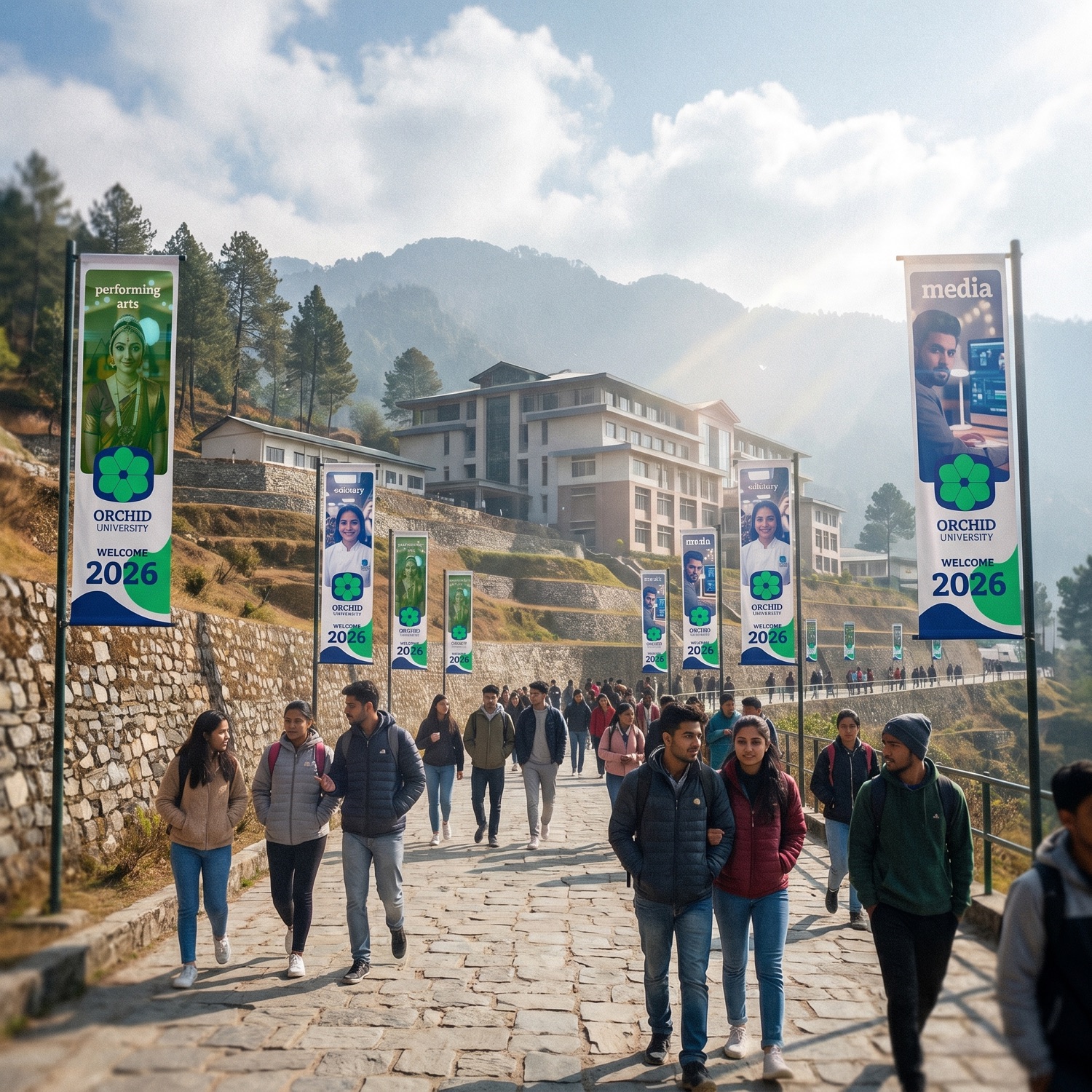
For a generation of Indian families, the equation was simple and sacred: secure a degree, and a stable career would follow. That promise built our colleges, filled our examination halls, and lifted millions into the middle class. But somewhere over the last decade, the equation quietly broke. Today, a young person can hold a perfectly respectable degree and still struggle to find meaningful work, while employers across sectors report that they cannot find candidates who are genuinely ready to contribute from day one. This is not a paradox. It is the skill-to-job gap, and it is the defining challenge of Indian higher education.
India's Demographic Dividend Is on the Clock
India is one of the youngest nations on earth. A vast share of our population is of working age, and that demographic dividend is widely described as a once-in-a-century opportunity. But a dividend is only paid out if the underlying investment performs. A young population that is educated but not employable does not power an economy; it strains it. The window during which India can convert its youth into productive, prosperous workers is open now, and it will not stay open forever.
The uncomfortable truth is that enrolment alone is not the bottleneck. India's Gross Enrolment Ratio in higher education has climbed into the high-twenties percent and continues to rise, a genuine achievement reflecting decades of expanded access. Yet rising enrolment has not translated cleanly into rising employability. We have become better at admitting students than at preparing them for the world they graduate into. The gap is not between Indians and opportunity; it is between what classrooms teach and what workplaces require.
Why a Degree Alone No Longer Guarantees a Job
The roots of the gap are structural, not personal. Curricula in many institutions were designed for an economy that no longer exists, updated slowly while industries reinvented themselves rapidly. A student may spend three years mastering theory that is examined on paper but never practised in context. The result is a graduate who can describe a concept but has never applied it, who has read about a tool but never used it, who has studied a profession from the outside but never stood inside it.
Employers feel this immediately. When a new hire needs months of remedial training before becoming useful, the degree on the wall starts to look like a beginning rather than a qualification. Several capabilities consistently separate the work-ready from the merely credentialed:
- Applied technical fluency, not just textbook familiarity, so a graduate can perform from week one rather than be retrained from scratch.
- Communication, collaboration, and problem-solving habits that are built only through real teams and real deadlines.
- Professional maturity, the unglamorous discipline of showing up, owning outcomes, and adapting to feedback.
- Adaptability, because the specific tools of any job will change, and the worker who can learn on the move is the worker who lasts.
None of these are taught well by lectures alone. They are formed through exposure, repetition, and consequence, the very things a conventional classroom is least equipped to provide.
The Policy Direction Is Clear
India's policymakers have read the same signals. The National Education Policy 2020 places skilling at the centre of higher education, calling for the integration of vocational and experiential learning into mainstream degrees rather than treating skills as a separate, lesser track. The National Credit Framework (NCrF) reinforces this by recognising learning that happens through work, apprenticeships, and hands-on practice, assigning it formal academic credit alongside classroom study. The message from policy is unambiguous: the artificial wall between education and employment must come down. What remains is for institutions to build the model that actually does it.
How Work-Integrated Education Closes the Gap
This is the conviction on which Orchid University in Sikkim was founded. A UGC Section 2(f) recognised State Private University, Orchid is built on the SEEL Framework, a deliberate sequence of Skilling, Education, Employment, and Livelihood that treats a career not as an afterthought of education but as its organising purpose. The aim is not to produce graduates and hope the market absorbs them, but to embed readiness into the degree itself.
In practice, this takes shape through Orchid's signature "Learn While You Earn" model, where work-integrated and apprenticeship-embedded degrees are aligned to the National Credit Framework. Students do not wait until graduation to encounter the real world; career readiness begins from day one. They earn academic credit for genuine work, develop applied skills inside actual workplaces, and graduate having already done the job they are training for. Underpinning this is an industry-partner network of more than 800 organisations, ensuring that what students learn stays tethered to what employers actually need. Theory and practice are not sequenced one after the other; they are woven together from the start.
The effect on a graduate is profound. An Orchidian does not enter the job market as an unproven promise but as a tested contributor with a record of real work behind them. The months of remedial training that frustrate employers shrink or disappear, because the training already happened, on the job, for credit, during the degree. This is what it means to be Skilled to Lead, Rooted to Serve, and Connected to Succeed: confident in capability, grounded in purpose, and connected to the networks that turn potential into a livelihood.
The skill-to-job gap is real, but it is not permanent. It is a design flaw, and design flaws can be fixed. India does not need to choose between educating its young people and employing them. With models that integrate work into learning from the first day, it can do both at once, and in doing so, finally cash the demographic dividend the world keeps telling us we hold.