
A university that lives where it stands.
Orchid is built in Sikkim — India's first fully organic state — in the foothills of the Himalayas. Sustainability here is not a policy document; it is the ground the campus stands on and the habits the campus teaches.
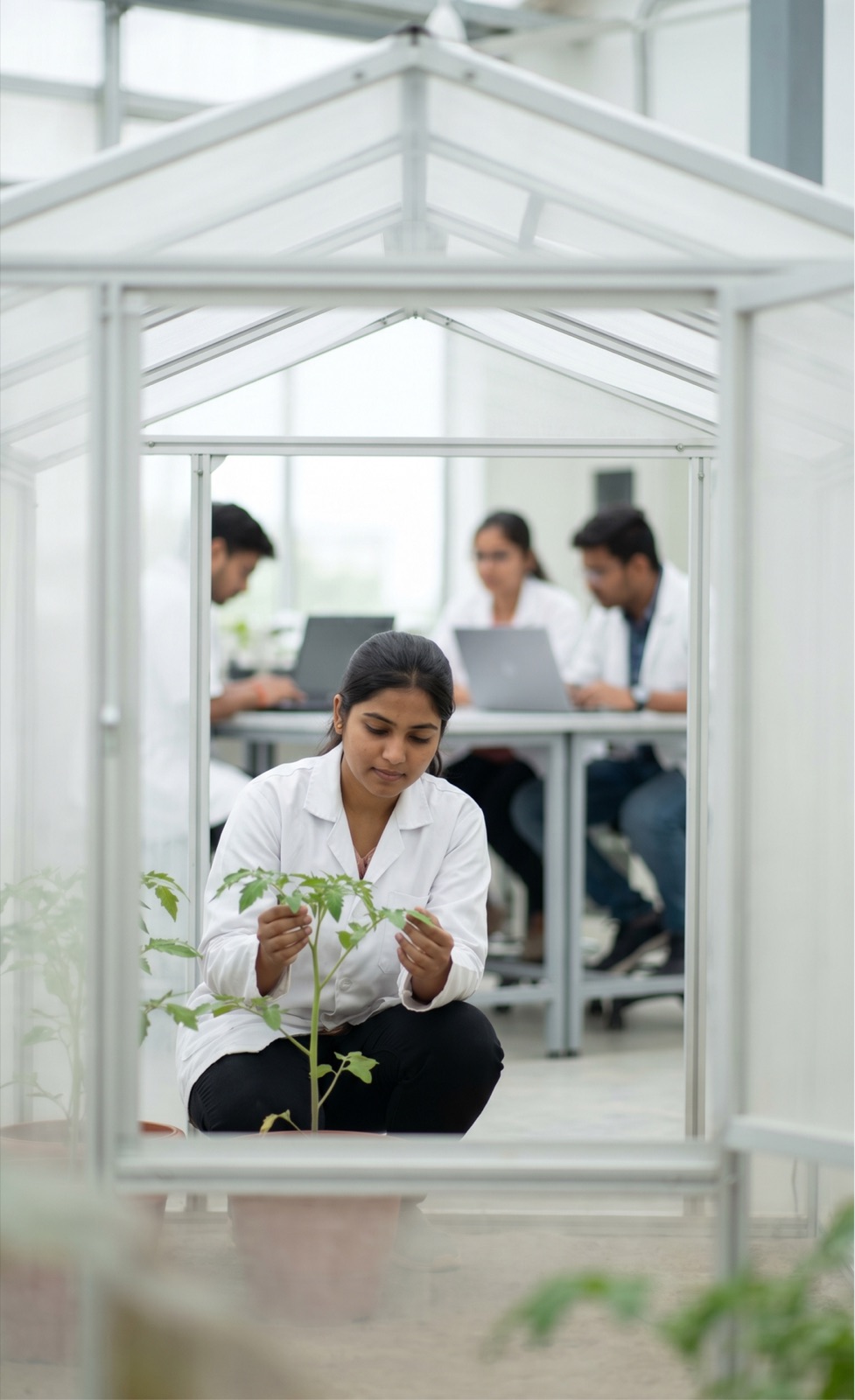
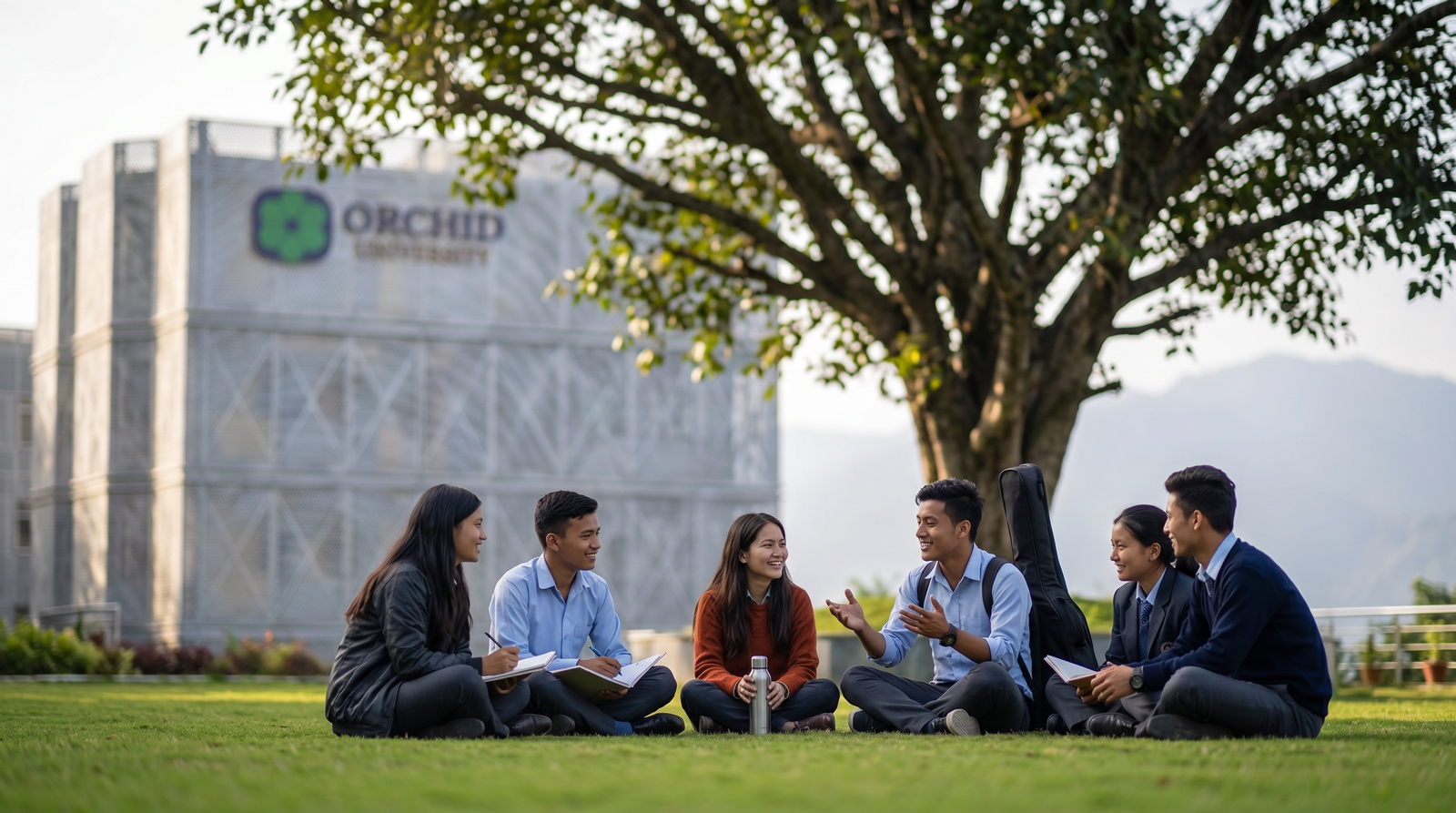
Where the campus is matters as much as what it contains.
Mangan sits at an altitude, in a climate, and in a landscape that quietly shapes the people who live there. Clean air, fresh food, open green space, and the slow grandeur of the mountains — a healthier, fuller way to live the years that shape a working life.
The 10-acre campus is deliberately compact and vertical — a smaller footprint, shorter distances, and an architecture that works with the hillside rather than against it.
Sustainability as daily habit.
Organic food culture
Campus dining sourced in step with Sikkim's organic farming ecosystem — fresh, local and seasonal.
Water & waste stewardship
Rainwater capture, waste segregation and a plastic-conscious campus, designed for a fragile Himalayan watershed.
Low-footprint operations
A compact vertical build, natural light and ventilation, and energy-conscious operations across the campus.
Research that gives back
The Field Research Centre engages Learners in sustainability, biodiversity and Himalayan ecology projects. FRC →
Agriculture in the curriculum
Farm-linked programmes and fieldwork that treat the surrounding landscape as a living laboratory.
Community stewardship
Rooted to Serve — Learners engage with the local community on conservation and rural development.
Aligned to the SDGs.
Orchid's model maps directly to the UN Sustainable Development Goals its mission touches most.
A campus that breathes.
Sikkim shapes the people who study here — the altitude, the air, the quiet, and a landscape treated as a living laboratory.
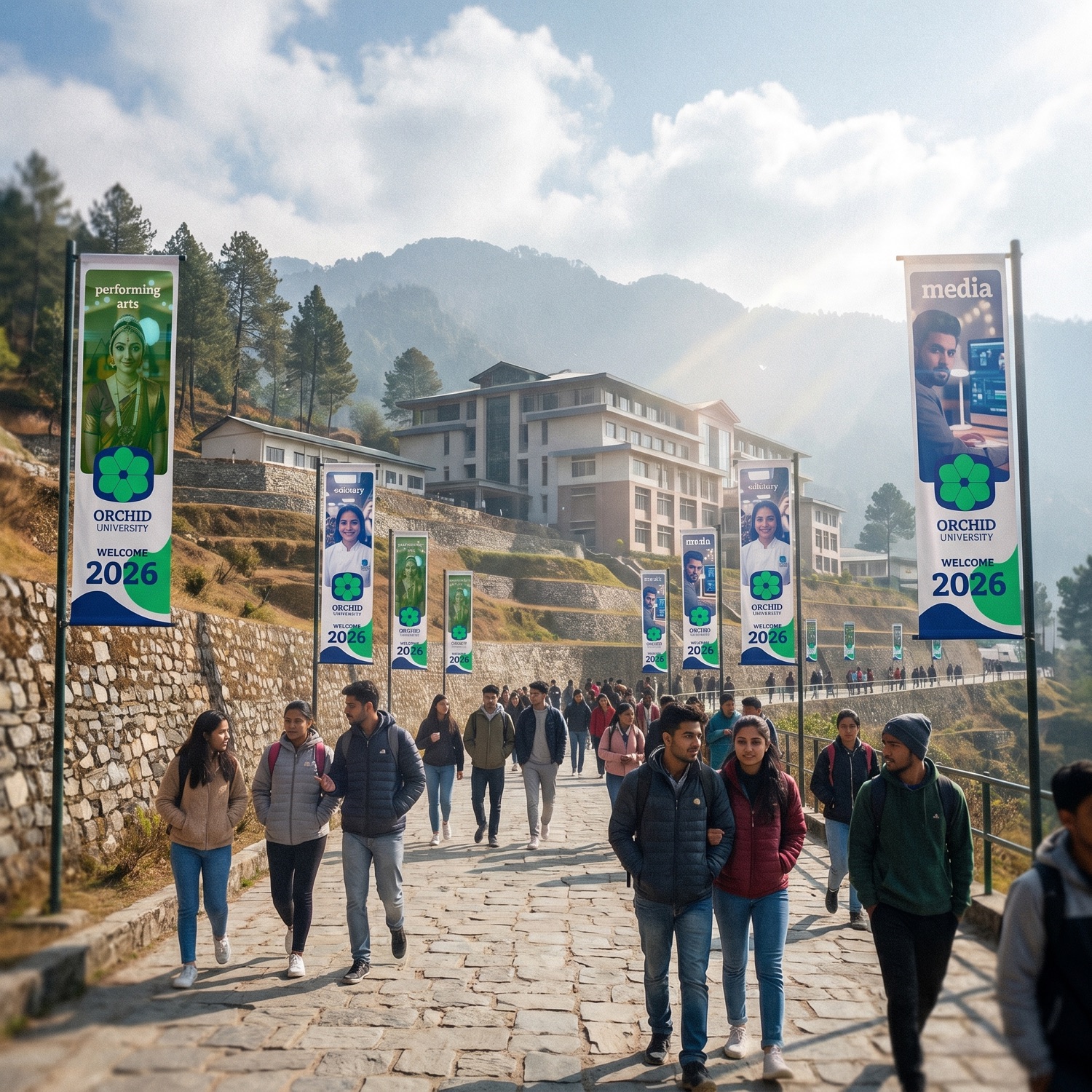
In the foothills of the Himalayas
Distance from metropolitan noise, air worth breathing, a pace that supports steady habits.
India's first organic state
Farm-linked programmes and fieldwork in a fully organic agricultural ecosystem.
A low-footprint, vertical campus
Ten acres, four floors — a smaller footprint and shorter distances by design.
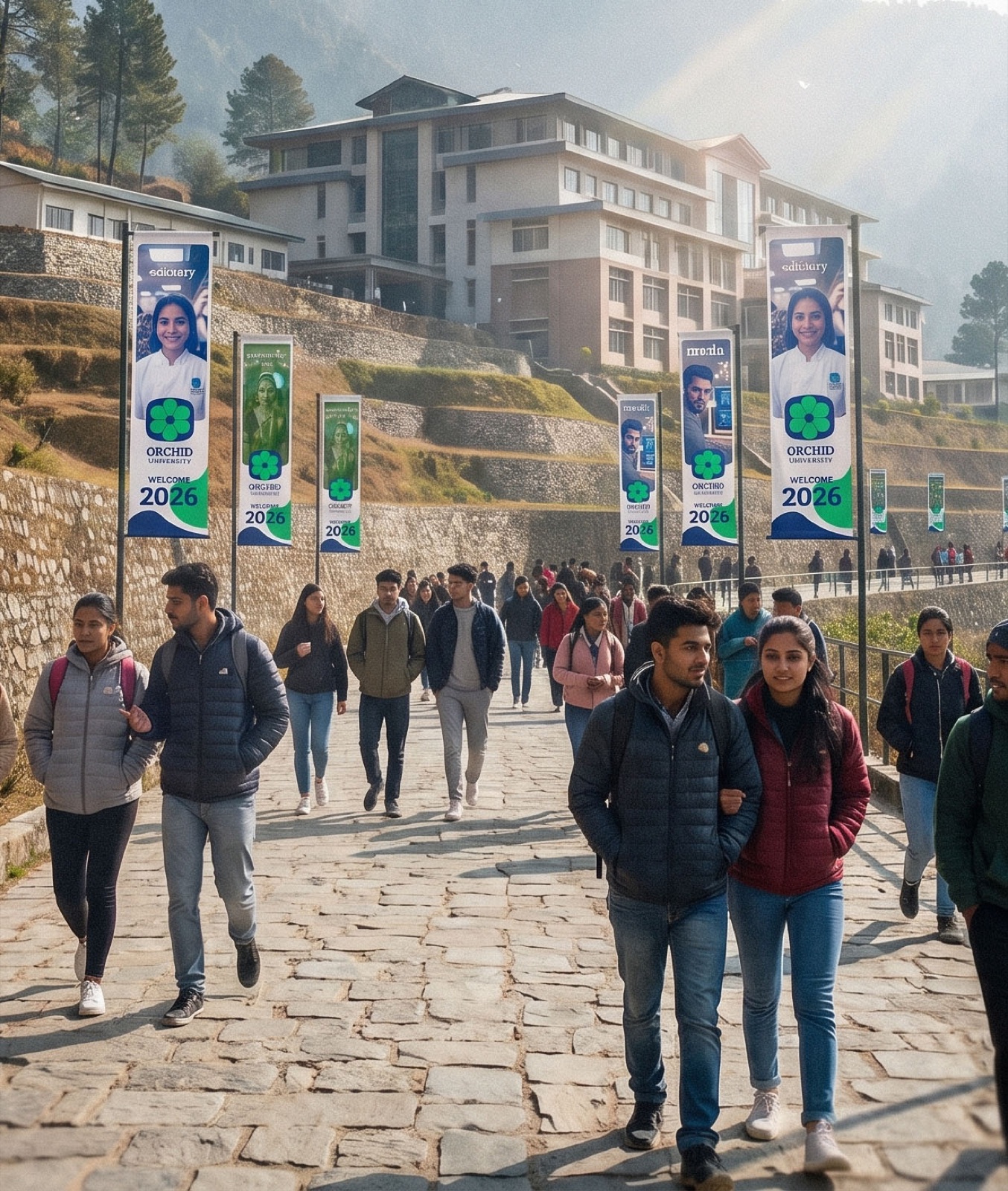
Sustainability, lived daily
Organic dining, waste stewardship and a plastic-conscious campus.
Study where sustainability is a way of life.
From organic dining to Himalayan field research — see what a green campus education looks like.