Earning Is Dignity
For first-generation learners, earning while studying is not just relief — it is dignity, confidence and independence.
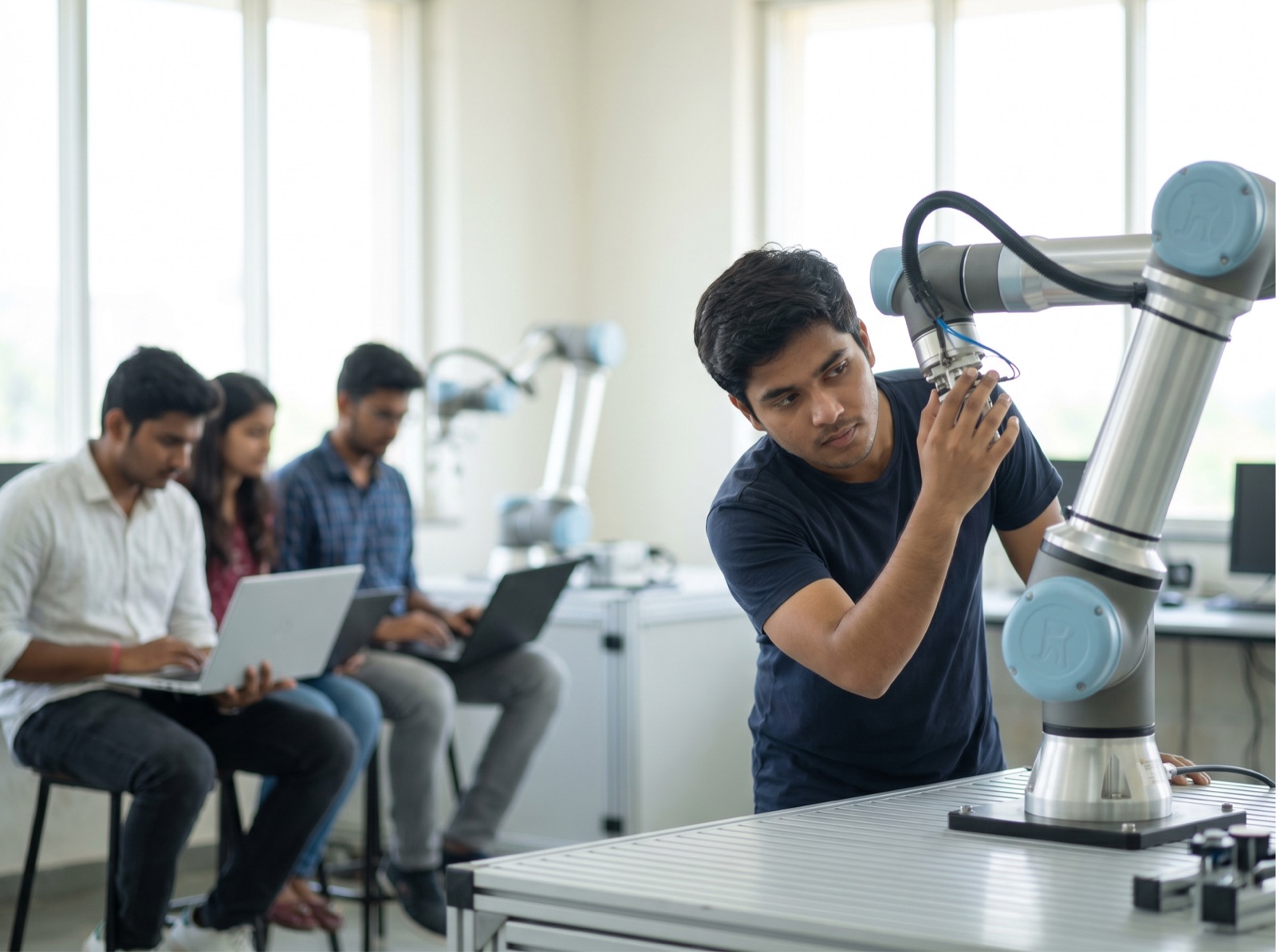
There is a quiet moment in many Indian households that rarely makes it into brochures about higher education. It is the moment a young person from a family of modest means asks whether they should go to college at all — or whether they should start earning instead, because the family needs the money now, not in three or four years. For first-generation learners, that question is not abstract. It is the difference between a degree and a wage, between a parent's hope and a household's survival. Orchid University in Sikkim was built around a simple conviction: that no one should have to choose. You can learn and you can earn, and in doing both, you can hold your head high.
The Hidden Cost of Higher Education
The most visible barrier to a degree is fees. But for families with limited means, the deeper barrier is invisible: the cost of not earning. Every year a young person spends in a classroom is a year they are not contributing to the household — a real, felt loss in homes where every income matters. This is one of the quieter reasons India's Gross Enrolment Ratio in higher education still trails that of many peer economies, and why rural, working and first-generation students drop away in disproportionate numbers. The shame of being a financial burden does as much damage as the shortfall itself. A student who feels like a drain on the family rarely studies with confidence. Doubt becomes a constant companion, and doubt is corrosive.
Earning Changes the Psychology, Not Just the Budget
This is where Orchid's model does something more interesting than offer relief. Through its SEEL Framework — Skilling, Education, Employment and Livelihood — and its "Learn While You Earn" approach built on paid on-job training, the university turns the student from a dependent into a contributor. A stipend earned through real work is not charity and it is not a loan to be feared. It is wages. And wages carry meaning that money handed down never does.
When a first-generation learner brings home their own earnings, the conversation at the dinner table changes. They are no longer asking permission to study; they are participating in the family's progress while they study. That shift — from burden to provider — is the heart of what dignity means here. It restores something that poverty quietly strips away: the sense that one's presence adds rather than subtracts. Students who earn report standing differently, speaking differently, planning differently. Independence, it turns out, is learned as much as it is funded.
Day One, Not Year Four
Conventional higher education asks students to wait. Wait until you graduate, wait until placements, wait until the market decides whether your years of study were worth it. For families living close to the edge, that wait is itself a luxury they cannot afford. Orchid compresses it. Its emphasis on Day One career readiness means a student is doing meaningful, paid, supervised work from early in the journey — not rehearsing for a career in the abstract but living inside one.
This matters practically and psychologically. Practically, the student builds a track record, references and skills that employers recognise, supported by a network of 800+ industry partners. Psychologically, work removes the terrifying uncertainty that haunts first-generation learners most: the fear that the whole gamble might not pay off. When you are already employed and already earning, the degree stops feeling like a bet against the future. It feels like an investment you are actively cashing in, week after week.
What Dignity Looks Like in Practice
The benefits of an earn-while-you-learn model compound in ways that are easy to underestimate:
- Financial independence — students fund part of their own education, easing pressure on families and reducing the temptation to drop out for short-term income.
- Confidence through competence — real workplace responsibility builds self-belief that no classroom alone can manufacture.
- A widened horizon — exposure to industry, mentors and professional norms shows first-generation learners possibilities their networks never could.
- Resilience — earning while studying teaches time, money and pressure management — quiet life skills that outlast any single qualification.
For students from rural Sikkim and across the Northeast — regions long underserved by mainstream higher education — these effects are amplified. Geography and history have too often meant fewer opportunities and farther distances. A model that brings paid, skill-building work to learners where they are, rather than asking them to leave everything behind and hope, is not just convenient. It is a recognition that talent is everywhere, even when opportunity has not been.
Rooted, Skilled and Standing Tall
Orchid's graduates — its Orchidians — leave with more than a UGC-recognised credential. They leave having already proven, to employers and to themselves, that they can do the work. That proof is the truest form of dignity higher education can offer: not a promise of what someone might become, but evidence of what they already are.
The university's tagline — Skilled to Lead. Rooted to Serve. Connected to Succeed. — reads differently once you understand the lives it is written for. To be skilled is to be employable from the start. To be rooted is to rise without abandoning home or family. To be connected is to reach a world that once felt closed. For a first-generation learner who once wondered whether college was even meant for people like them, earning while they learn answers the question completely. Yes, it is meant for you. And you will pay your own way there — with your head held high.