A National Imperative
Why affordable, industry-integrated, skill-based higher education is central to India's economic future.
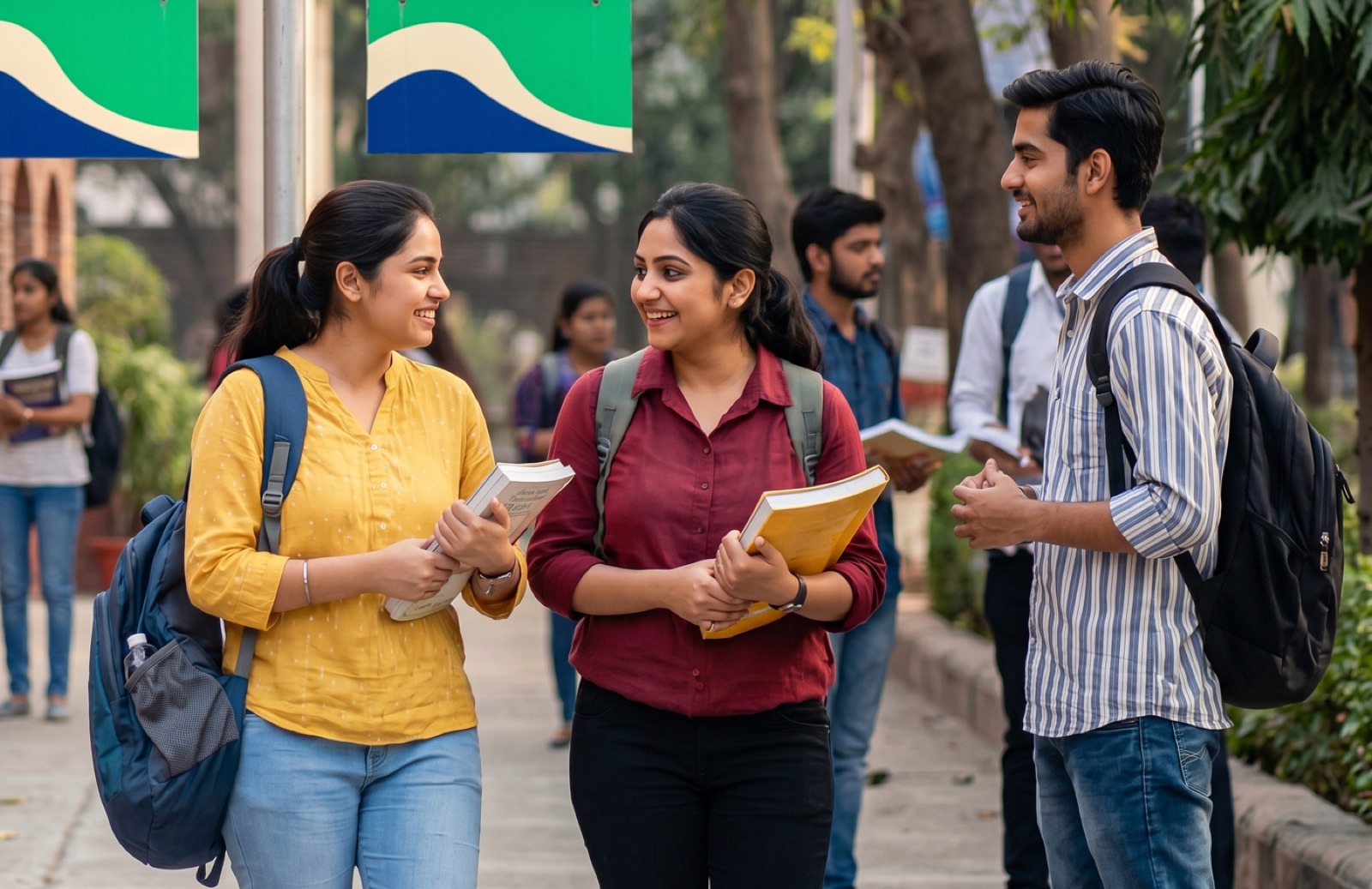
India stands at a rare and fleeting moment in its history. With one of the youngest populations on Earth and a vast working-age cohort entering adulthood over the coming decade, the nation holds an asset that most of the developed world can only envy: a demographic dividend. But a dividend is only realised if it is invested wisely. A young population without education is a liability; a young population that is skilled, employable, and rooted in purpose is the engine of a rising economy. The question before us is not whether India has the talent. It is whether we can build the institutions to develop that talent at scale, at speed, and at a price ordinary families can afford.
The Enrolment Gap We Must Close
For all of India's progress, the proportion of young people who enter higher education remains well below that of advanced economies. The National Education Policy 2020 set an ambitious vision: to dramatically raise the Gross Enrolment Ratio in higher education and to make learning more flexible, multidisciplinary, and tied to real-world skills. Reaching that goal is not a matter of building a few more elite campuses. It requires reaching the students who have historically been left out: the rural youth whose nearest college is hours away, the working adults who cannot pause their incomes to study, and the first-generation learners whose families have never sent anyone to a university before.
These are precisely the students that Orchid University exists to serve. As a UGC Section 2(f) recognised State Private University in Sikkim, Orchid was founded on a simple but demanding premise: that higher education should expand opportunity rather than ration it. Closing the enrolment gap is not charity. It is the single most powerful lever India has to convert its population into productivity, and to ensure that growth is shared across regions and communities rather than concentrated in a handful of cities.
Skills, Not Just Certificates
The frustration of the Indian graduate is well known: a degree in hand, yet doubt about whether it leads to a job. The gap between what classrooms teach and what employers need has been the quiet drag on our growth story. The Skill India mission was born to address exactly this, and the message it sends is clear: a credential is only as valuable as the capability it represents.
Orchid's answer is the SEEL Framework, an integrated approach to Skilling, Education, Employment, and Livelihood. Rather than treating these as separate stages, SEEL weaves them into a single continuous journey, so that learning leads to skill, skill leads to work, and work sustains a livelihood. The framework rests on a few practical commitments:
- Work-integrated degrees that embed real industry experience into the academic programme, so students graduate with a track record, not only a transcript.
- A "Learn While You Earn" model that allows students to support themselves and their families while they study, removing one of the largest barriers that keeps capable young people out of higher education.
- More than 800 industry partners who help shape curricula, host learners, and open doors to employment, ensuring that what is taught maps to what the economy actually demands.
Affordability as Nation Building
It is easy to talk about access in the abstract. In practice, access is decided at the kitchen table, when a family weighs the cost of a degree against the income a young person could otherwise be earning. For millions of households, that arithmetic ends with the door to higher education quietly closing. Affordability, therefore, is not a marketing feature. It is the precondition for inclusion, and inclusion is the precondition for a truly national workforce.
By keeping education affordable and pairing it with earning opportunities, Orchid changes that arithmetic. A model that lets a student learn and earn at the same time transforms higher education from a deferred gamble into an immediate, self-sustaining investment. Multiply that change across thousands of families, and the effect is no longer individual; it is national. Every first-generation graduate becomes a household's first professional, a community's proof that the path exists, and a contributor to the tax base, the consumer economy, and the skilled labour pool the country needs.
An Ecosystem Built for Impact
No university can do this alone, and Orchid was never designed to. Its strength lies in an ecosystem that aligns purpose with capability. The Peace of Dream Foundation anchors the mission of opportunity and service. The Distil Group brings industry depth and the real-world pathways that make work-integrated learning credible. The Government of Sikkim provides the enabling partnership of the state, while national bodies such as the UGC and the Association of Indian Universities (AIU) provide the recognition and academic legitimacy that give an Orchid degree its standing. Together, this network turns a single campus into a platform for change that reaches far beyond its walls.
The outcome of this model is a particular kind of graduate. Orchidians are educated to be capable, but also grounded; equipped to compete in a national economy, yet committed to serving the communities they come from. That balance is captured in the university's guiding promise: Skilled to Lead. Rooted to Serve. Connected to Succeed.
The Stakes, and the Opportunity
India's demographic dividend will not wait. The window in which a young population can be converted into lasting prosperity is measured in years, not generations. If we succeed in raising enrolment, closing the skills gap, and making opportunity affordable, we will not merely improve individual lives; we will strengthen the foundations of the entire economy. If we fail, the same demographic strength becomes a source of frustration and unrest.
This is why Orchid frames its work not as the business of running a university, but as a contribution to nation building. Industry-integrated, affordable, skill-based higher education is good for the student who earns a degree and a livelihood. It is good for the employer who gains a job-ready workforce. And it is essential for a country determined to turn its greatest demographic advantage into enduring national strength. That is the imperative of our time, and it belongs to all of us.